Catching People Off Guard: The Case for Art That Nobody Planned to See
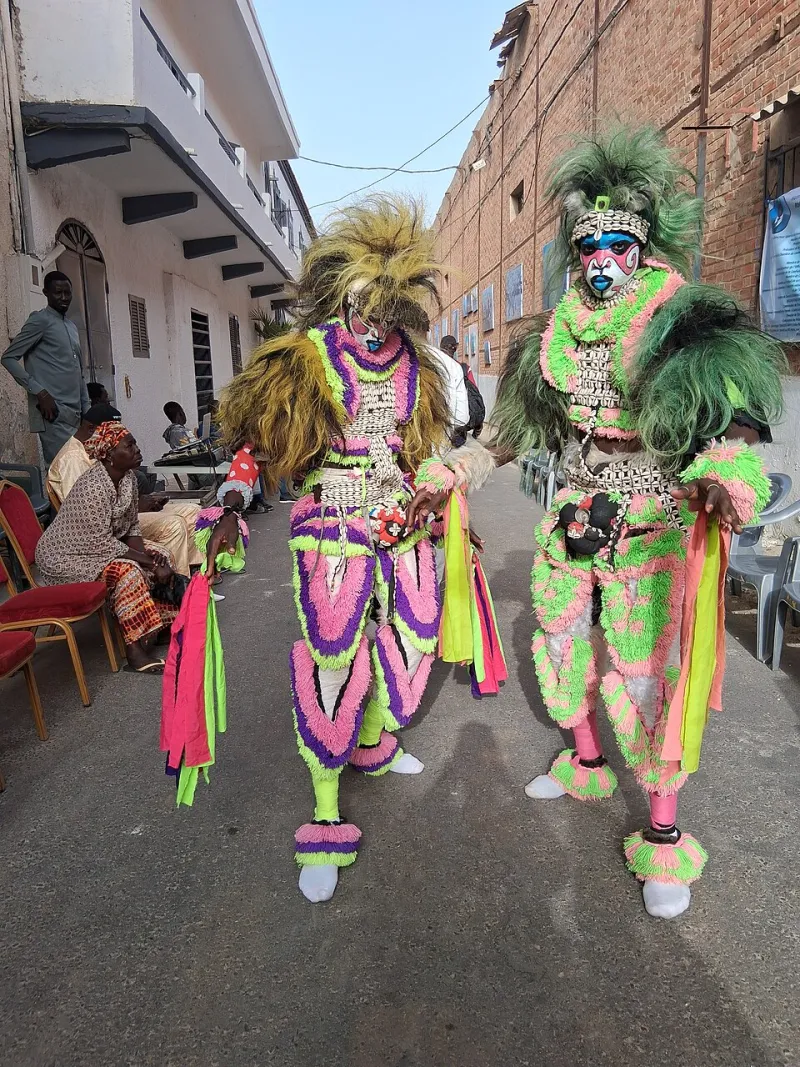
Photo: Adjoajo, CC BY 4.0, via Wikimedia Commons
There's a moment, somewhere between the pier and the Peace Statue, when the promenade stops being a route and becomes a room. People slow down. Someone's playing something. A crowd forms in that loose, uncommitted way British crowds do — half watching, half ready to walk on. Nobody bought a ticket. Nobody read a listing. And yet something is happening, and it's happening to them.
That's the moment I want the city to take seriously. Not as a nice by-product of a festival, but as a design goal.
The promenade doesn't ask for a ticket
Brighton & Hove is unusually well supplied with accidental auditoriums. Madeira Drive on a windy Sunday. The Level on a Saturday afternoon. Brunswick Square, Queen's Park, the railings along Hove Lawns, the weird generous width of London Road. Neighbourhood high streets from Portland Road to St James's Street to the parade in Saltdean, where a bit of street theatre would land on people who were only out for a pint of milk.
These aren't venues with bad sightlines. They're the largest free Cultural venue in the city and we treat them as scenery.
We should say the quiet part plainly: the arts sector spends an enormous amount of energy converting the already-interested. Mailing lists, previews, early-bird pricing — all of it aimed at people who have already decided that culture is for them. That work matters. But it can't do the thing that public art does, which is to reach the person who would never have described themselves as an arts audience and would be mildly insulted if you suggested it.
Why accidental beats accessible
'Accessible' has become a word about ramps and captions, which is necessary but narrow. Accidental is different. Accidental is about removing the decision. The person who stumbles across a choir in a shopping centre didn't have to weigh up whether they'd enjoy it, whether they'd fit in, whether they'd know how to behave. They just found themselves in it.
That's how belonging actually forms — not through invitations, but through unplanned proximity. You share a ten-minute experience with forty strangers on a Tuesday and, without anyone making a speech about community cohesion, the street becomes slightly more yours.
This matters more in 2026 than it did a decade ago. Our public spaces are more contested, our attention is more curated, and the digital version of the city is increasingly the version people actually move through — headphones in, phone out. Anything that interrupts that with something live and unmediated is doing civic work, whether or not it has a participation target attached.
What commissioning for surprise looks like
It starts with admitting that a poster is not outreach. If the brief says 'engage new audiences', the honest follow-up question is: where will they be standing when it happens?
Good public commissions are built backwards from the site. Not 'we have a dance piece, where can we put it', but: what happens here on a Thursday, who's here, how long do they linger, what would make them stop? That leads to very different work — twenty minutes rather than an hour, repeatable rather than one-off, loud enough to carry over traffic or quiet enough to draw people in.
It also means paying properly for the invisible craft. Street performance and pop-up work is technically demanding: weather contingency, crowd management, licensing, sound thresholds, the fact that half your audience arrives mid-piece and needs to be able to join the story anyway. Funders who treat outdoor work as a cheaper version of indoor work are getting a worse version of both.
And it means letting artists take risks in public. A seafront piece that fails still leaves a hundred people with something to talk about at the bus stop. That's not a waste of money; it's the cost of a culture that's visible.
The fairness problem we don't discuss
Here's where the progressive case gets uncomfortable. Most accidental culture happens in places that are already busy — the seafront, the city centre, the North Laine. The places where a pop-up would genuinely surprise people are the ones with the fewest footfall metrics to justify it: a residential corner of Portslade, the top of Whitehawk, a stretch of Moulsecoomb Way. If we only commission for crowd density, we reproduce the same map of cultural attention that already exists.
So the commissioning criterion shouldn't be 'how many will pass'. It should be 'who has never been passed by anything'. That's a different commission, and a harder one, and an argument for a modest public art budget that isn't tied to visitor economy numbers.
Small infrastructure, big return
We should stop filing this under 'extras'. A city that commissions street work is buying something more durable than an event: it's buying the habit of being surprised in public, which is a precondition for a shared civic life. It's cheap relative to almost anything else the city does with public space, and it's the only cultural spending that reaches people who never opted in.
So: a rolling micro-commission for accidental audiences, sited deliberately and occasionally awkwardly. A standing budget line for outdoor and street work that doesn't require a festival to justify it. A licensing and permitting route that doesn't punish a three-person performance for not being a funfair.
And a small shift in how we measure success — not just how many came, but how many stopped.
If you're an artist reading this with a half-formed idea about a corner of the city that nobody uses properly, that's exactly the kind of thing we want to hear about. The seafront is already our studio. We just haven't agreed to pay for the rehearsal.