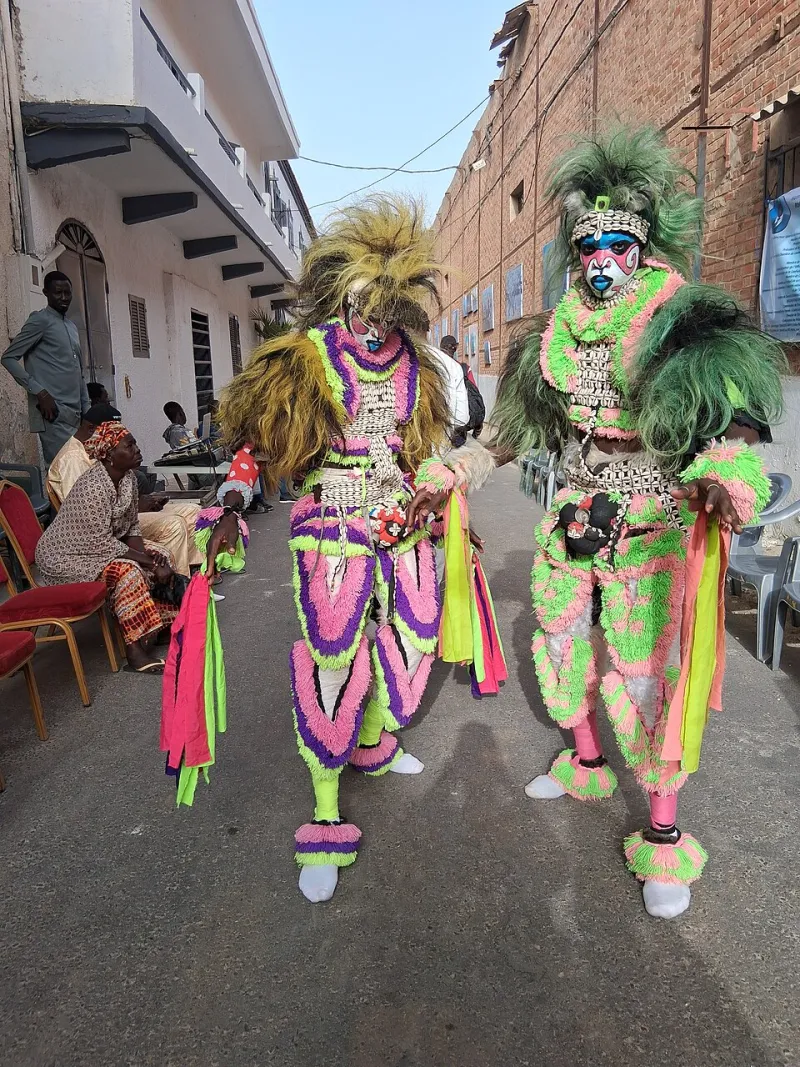
Small Pots, Big Leaps: A Working Artist's Guide to Micro-Funding in Brighton & Hove
Photo: Wilhelm Marstrand, Public domain, via Wikimedia Commons
There's a particular kind of optimism that hits in January. You've got a notebook full of ideas, a friend with a PA system, and a vague sense that somebody, somewhere, gives out money for this sort of thing. That sense is correct. The problem is that 'somebody' is actually a dozen different bodies with a dozen different agendas, deadlines and definitions of the word 'community'.
So let's be useful. This isn't a list of links — guidance changes, portals move, and any list will be out of date by spring. It's a way of thinking about the small-funding landscape in Brighton & Hove so that when you do sit down with an application form, you're already halfway home.
Start with the size of the thing, not the size of the dream
The most common error we see is a brilliant, sprawling idea crammed into a £1,500 application. Micro-grants don't reward ambition compression. They reward clarity. If your project genuinely needs £12,000, a seed fund isn't the right first step — but a £500 pot might fund the test that proves the bigger idea works. Think in stages: scratch, pilot, share, scale. Funders at the small end are often buying evidence, not events.
Ask yourself three questions before you open any form. What would I do with £500? What would I do with £3,000? What would I do with £10,000? If your answers are the same project described three ways, you haven't thought about scale yet.
The pots worth knowing in 2026
Broadly, small cultural funding in the city falls into four families.
Council and civic pots. Brighton & Hove City Council and its partners run small grants tied to neighbourhoods, wellbeing, and cultural participation. These tend to favour work that can be described in terms of residents, wards and public benefit rather than artistic development. If your project happens on a specific street or estate, say so loudly.
Arts Council England's project grants. The national funder's lower band is still the workhorse for individual artists and small organisations, and it's less intimidating than its reputation suggests. It rewards a clear artistic rationale plus genuine public engagement — which is not the same as a big audience number.
Trusts and community foundations. Sussex-based charitable funders often sit under the radar. They're relationship-driven, they read your budget properly, and they're considerably more likely to fund the unglamorous bits — access costs, childcare, transport, documentation — that project grants can be sniffy about.
Commissioning programmes and micro-commissions. Festivals, venues, and networks across the city regularly offer small paid commissions rather than open grants. These are usually advertised in bursts, often with short windows. Follow the organisations you'd want to work with rather than waiting for a directory to tell you.
Matching the project to the pot
Here's where most applications go wrong, and it isn't the writing. It's the match.
A seafront performance with a loose, evolving audience is a poor fit for a funder who needs to report on named participants. A six-week workshop series in Whitehawk or Moulsecoomb is a poor fit for a pot that only funds final presentation. A zine about the city's queer history might sail through a heritage-adjacent fund and stall at an arts development one, purely because of the language in the criteria.
Read the guidance twice: once for what they'll fund, once for how they describe success. Then rewrite your project summary in their vocabulary without lying about your project. If that feels impossible, you've got the wrong funder — and no amount of elegant prose will fix it.
Evidence: the bit everyone leaves until the night before
Assessors aren't asking for proof that your idea is good. They're asking for proof that you can deliver it. Those are different questions and the second one is answerable.
Have ready: a realistic budget with named costs (not 'materials — £400'), a timeline with weeks rather than vibes, a short statement of what happens if it rains or a collaborator drops out, and some indication that the people you say you'll work with have actually been asked. A screenshot of a WhatsApp group agreeing to something is not a partnership letter, but a two-line email from a community centre saying they'd host you is worth more than a page of adjectives.
For civic-minded work — community workshops, pop-up performances, anything with a public-facing claim — funders increasingly want to see how access was designed in, not bolted on. Step-free routes, BSL interpretation, pay for participants, timings that work around school runs. Put these in the budget as line items. Costing access properly signals you've done this before.
Timelines and the calendar trap
Small funds are seasonal in ways nobody warns you about. Council pots often align with financial years and close in late winter or early spring. National project grants have rolling deadlines but take roughly two to three months from submission to decision, longer if you're asked to revise. Charitable trusts may meet quarterly, which means a missed meeting is a missed quarter.
Work backwards from when the work needs to happen, not forwards from when you feel ready. If your project is a summer seafront thing, the application conversation is happening now, in the cold. If you're planning something for Brighton Fringe, assume you needed to have started yesterday.
Pitfalls that sink otherwise good applications
Overclaiming audience numbers is the classic. Nobody believes you'll reach 4,000 people with a £900 grant, and saying so makes assessors doubt everything else. Underbudgeting your own time is the second — paying yourself nothing reads as inexperience, not generosity. Copy-pasting a previous successful application is the third; criteria shift, and assessors can smell a recycled paragraph.
And the quiet one: applying alone when you didn't have to. A first-time applicant paired with an experienced producer, a venue, or a community organisation is a much safer bet for any funder. Partnership isn't a weakness in an application. It's the whole point.
If it's a yes, and if it's a no
If you get the money, do the boring things first: sign the agreement, diarise the reporting, photograph everything, and pay your collaborators on time even when the funder pays you late. Your reputation is the only grant stream that never closes.
If you don't, ask for feedback and actually read it. Then go smaller, or sideways, or find the partner who makes the next application stronger. Almost nobody in this city got funded on their first attempt. Most of the good work you've seen on the seafront started as a £700 pilot that somebody nearly didn't bother applying for.