The Clipboard Economy: Brighton’s Festivals Can’t Keep Running on Borrowed Time
As the last of the 2026 festival barriers are stacked behind the seafront arches, the spreadsheets start to look tidy. The stage has gone, the licence conditions have been signed off, and the final thank-you email has landed in a few thousand inboxes. Somewhere near the bottom of the budget is a line marked volunteers. It often reads zero. That zero is not the cost. It is the subsidy.
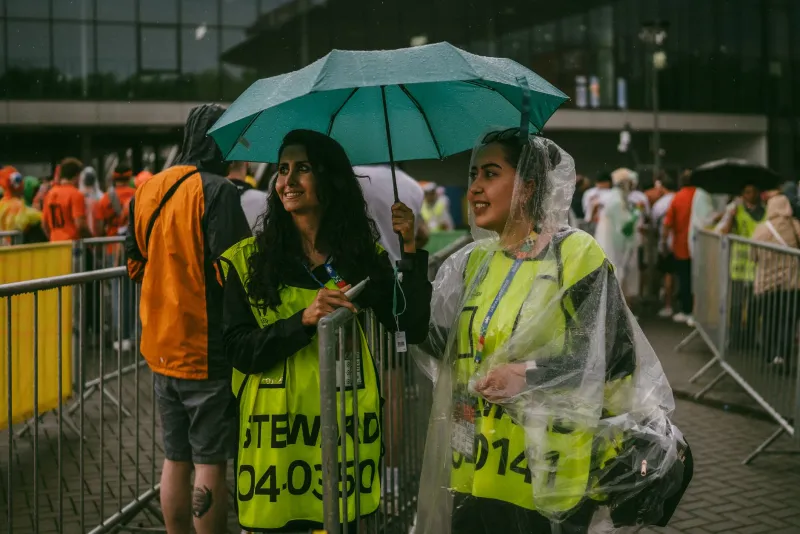
Across Brighton Festival, the Fringe, Pride and a constellation of smaller neighbourhood festivals, the city’s cultural calendar leans hard on people who give their time for expenses-only reimbursement, a lanyard and a warm sentence in the closing report. They steward sites in the rain, staff box offices, build sets, hand out flyers in North Laine, check wristbands at Preston Park and help audiences find the accessible entrance when the signage has already been vindicated by wind. Some get paid travel. Some get a packed lunch. Some get nothing but the glow of having been useful.
That glow is real. It is also not a funding model.
The bit that looks free
Volunteering can be a brilliant route into the arts. It can build confidence, skills and friendships. It can give someone their first look behind the curtain of a festival they have loved from the audience. But there is a difference between an open door and an unpaid shift pattern that keeps the whole operation upright.
The hidden costs sit in the small print. Travel is often reimbursed later, which means the volunteer has to bankroll the festival first. Meals are sometimes covered, sometimes not. Childcare is rarely covered at all. A disabled volunteer may need to pay for a personal assistant, a taxi or extra time, and find that the expenses form has no box for any of it. Phone data gets used up on group chats. A three-hour shift becomes five hours with the walk to the site, the briefing, the handover and the wait for the bus home.
None of this is a complaint about volunteers. It is a complaint about a system that treats their goodwill as a free input rather than a cost that somebody, somewhere, has already absorbed.
Burnout is a budget outcome
Goodwill has a shelf life. Ask anyone who has done three shifts in a row, been moved to a different gate at short notice, and then been asked to fill in a feedback form about how empowering it all felt. The people who stay are often the ones with the most patience, the most spare time, or the least choice about saying no. The people who leave are often the ones with the most experience.
That is where the skills gap opens up. The person who knows where the accessible toilet key is kept, how the radio channel works, which gate gets the afternoon rush and which local resident will complain if the bass carries past 10pm is not a replaceable widget. They are a walking manual. If they leave after a difficult season because they are exhausted and out of pocket, the next festival starts from scratch.
Paid coordinators are not a luxury here. They are the memory of the event. They can recruit, train, rota, check in, solve problems and make sure the handover does not live in one volunteer’s head. A funded coordinator post is often the difference between a resilient festival and a heroic one that collapses when the right person moves to Bristol.
Who gets to volunteer?
There is a progressive argument for volunteering, but only if we are honest about who can afford it. An expenses-only role is not equally open to everyone. If a shift costs you a bus fare, a sandwich and four hours of unpaid time, it is a very different offer for someone with savings and flexible work than for someone on a zero-hours contract, a parent paying for childcare, a disabled person managing access costs, or a young creative already doing three unpaid internships to get a foothold.
The result is a volunteer pool that tilts towards people who can subsidise the city’s culture out of their own pocket. That is not a community model. It is a filter. If we want Brighton’s festivals to reflect the city — Whitehawk and Hangleton as well as Hove, Moulsecoomb as well as the Lanes — then the volunteer offer has to include upfront expenses, accessible payments, training and a rota that does not assume everyone has a free weekend and a partner with a car.
A fairer ledger
A better funding settlement would not pretend that every task must become a paid job overnight. It would, however, stop pretending that coordination is free. Funders should expect to see a proper volunteer budget: paid lead coordinators, a float for expenses paid on the day, a clear access fund, training time, safeguarding, and a handover plan that does not depend on someone’s personal phone contacts.
It also means asking harder questions at application stage. Who is doing the unpaid work? What does it cost them to show up? How are expenses paid and how quickly? What training is provided? Who is responsible when a volunteer has a problem at 9pm on a Saturday? These are not bureaucratic fripperies. They are the difference between a sector that builds skills and one that quietly burns them.
Brighton & Hove Arts Commission wants a cultural budget that connects communities rather than extracting from them. That means valuing the clipboard as much as the stage. The festival economy is one of this city’s great assets, but it cannot keep running on borrowed time, borrowed cars and borrowed patience.
So as the 2026 season goes into the archive, let us put the volunteer line back into the budget where it belongs. Not as a thank-you. As a cost we are finally willing to meet.