Before the Headliner: Brighton's Missing Early-Evening Culture
Photo: BLM Nevada, Public domain, via Wikimedia Commons
The 8pm default
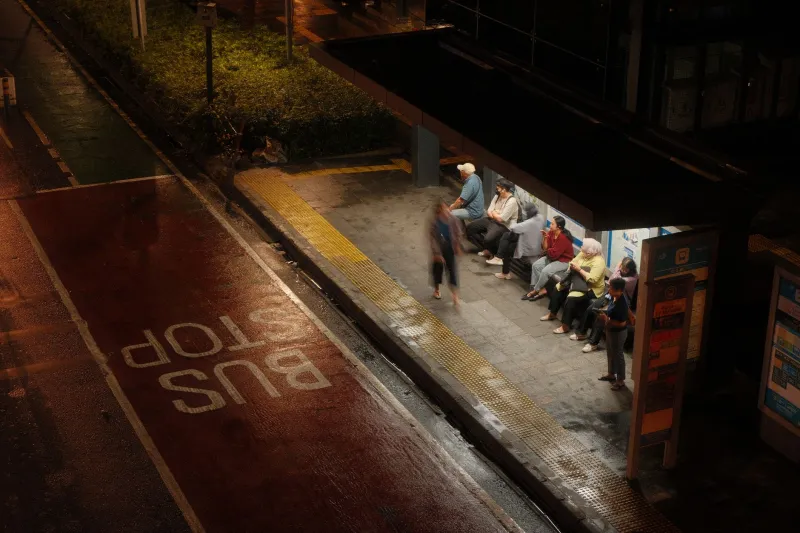
You know the drill. Doors at seven thirty, show at eight, support at eight fifteen, headliner at nine, and by the time the room is full the last sensible bus home has started to feel like a rumour. Brighton & Hove does after-dark culture brilliantly. Komedia, Concorde 2, Chalk, The Old Market, the Dome, the small rooms above pubs and the seaside venues that smell faintly of salt and lager: this is a city that knows how to put on a night. But a night-time offer is not the same as an all-day civic offer. And the default start time is one of the quietest access barriers we have.
It is not a scandal. Nobody is conspiring to keep people out. It is just habit: venue availability, licensing, audience expectation, the idea that culture is what happens after work. But habits become rules, and rules become gatekeepers. In 2026, with budgets tight and every grant asked to prove its reach, we should be honest about who is already at home by eight.
Who is missing from the room
Think about the carer who cannot leave until the evening personal care is done, and then cannot face a two-bus journey into town for a nine o'clock start. Think about the parent who could manage a five thirty theatre show with a child, but not a nine thirty finish on a school night. Think about the older audience member who loves live music but does not love walking back from a dimly lit side street at eleven. Think about disabled people who need to plan travel, toilets, seating and energy, and for whom a late finish is not a small inconvenience but the difference between going and not going. Think about shift workers, hospitality staff, cleaners, nurses and bus drivers who are often the people making the city's night-time economy run.
And think about the outer neighbourhoods. Brighton's cultural map is not just the centre. Whitehawk, Hangleton, Moulsecoomb, Portslade, Saltdean and Patcham all have artists, audiences and ideas. But when the cultural offer depends on a late trip into the city centre and an expensive taxi home, the map shrinks. The city's night-time buzz can be a genuine asset and still be a poor fit for a huge number of residents.
The funding blind spot
Grant applications love audience numbers. They love a packed room and a tagline about reaching new people. They are much less good at asking a simple question: when does this happen, and who can actually get there? A project can hit its audience target and still have excluded half the people it claims to serve. That is not a failure of artists. It is a failure of the brief.
Funders could ask for a time-access plan without turning every application into a bureaucratic obstacle course. What is the earliest start? Is there one daytime or early-evening event? Is there a relaxed version? Is there a family-friendly slot? Are there travel notes that acknowledge buses, trains, taxis and the reality of finishing after dark? Does the budget include paying artists for an extra shorter set rather than expecting them to work a full day for free? Small conditions can shift behaviour. If a grant says one early event is expected, people programme one early event. If it does not, the eight o'clock default rolls on.
What early programming actually looks like
The good news is that Brighton already knows how to do this. Libraries run daytime author events. Community centres host workshops and small gigs. The Brighton Festival and Fringe have family programmes and daytime strands. Pubs with back rooms can open their doors at six for a spoken-word night and still have the room for the late crowd. Churches, halls and school buildings sit empty for much of the evening while cultural budgets chase the same handful of black-box venues.
What would help is a bit more imagination about partnership. A venue partnership with a library or community centre could unlock early-evening space. A bus partnership could make a six thirty start realistic for people travelling across the city. A grant condition could fund a crèche or a paid carer's ticket. A promoter could trial a five thirty show and a seven thirty show instead of one late one. None of this is radical. It is just scheduling with more people in mind.
Culture is a clock, not just a room
Access is often talked about as ramps, captions and ticket prices. All of that matters. But time is access too. The hour a thing starts tells people whether they are welcome. A nine o'clock headline slot says the ideal audience is someone who is free after eight, can afford to get home late and does not have caring responsibilities waiting at the door. That is not most of the city.
Brighton & Hove's cultural sector is full of people who care about this stuff. The ask is not to cancel the night. The night is part of what makes this city feel alive. The ask is to stop treating eight o'clock as the only serious time for culture. In 2026, let's fund the early show, the daytime workshop, the six o'clock gig and the five thirty theatre slot with the same seriousness as the headline set. Let's make the calendar wider. Let's let more people get home before the headliner, and still have had a brilliant night out.