The Fare Is the Front Door: Why Brighton's Culture Budget Needs a Travel Line
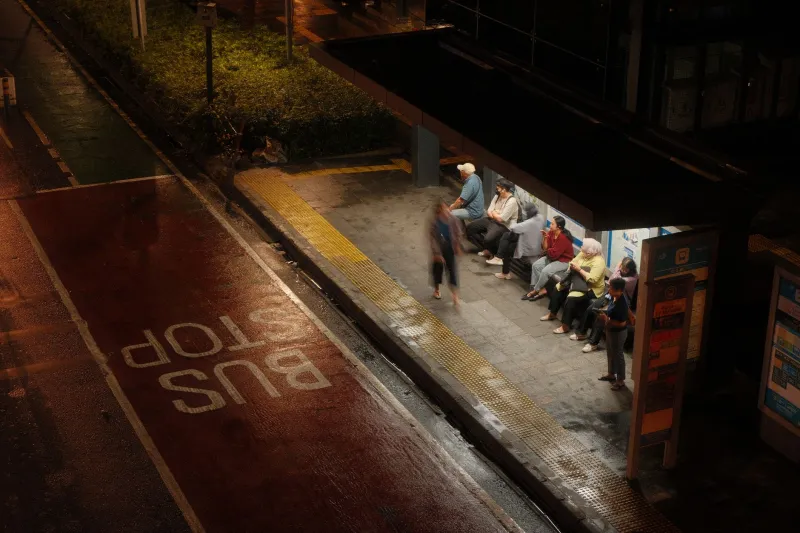
It’s 11:07pm on a Thursday and the queue for the night bus stretches past the kebab shop. Inside the venue, the encore is still ringing. Outside, a different calculation is underway: who can afford to stay, who has to leave early, and who never came at all because the last bus back to Hangleton leaves before the headliner.
We talk a lot about access in the arts. We write it into funding bids, we tick the box on the form, we make sure there’s a ramp and a hearing loop. All of that matters. But in Brighton & Hove, access is also a £5.60 return fare, a 40-minute wait in the rain, and a taxi home that costs more than the ticket. The fare is the front door. And right now, too many people are being quietly turned away at it.
The 11pm calculation
Picture a midweek gig at Chalk or a late show at the Dome. Ticket: £16. A drink: £6. Bus there and back from Whitehawk: £5.60. That’s before you’ve paid for the babysitter, or the phone credit, or the fact that you’ve got work at 7am. For a lot of people in this city, the cultural decision isn’t ‘do I want to go?’ It’s ‘can I get home?’
The night bus is a lifeline, but it doesn’t reach everywhere. If you live in Portslade or Patcham, you might be looking at a change, a wait, or a walk. If you’re a disabled audience member, the step-free route might add twenty minutes. If you’re a young person, the last bus might be the only bus your parents will allow. None of these things are arts problems in the traditional sense. They are transport problems. But they decide who is in the room.
An audit nobody runs
Funders are rightly obsessed with audience data. They want to know who came, who didn’t, and why. But how often does a grant application ask for a travel plan that isn’t about the artist’s van? How often does a venue’s access statement include the last bus time from the nearest stop?
We could audit this tomorrow. Pick five venues: Brighton Dome, Theatre Royal, The Old Market, Fabrica, Phoenix Art Space. Map the nearest bus stops, the last services, the fares from four outer estates. Ask a simple question: if you live in Moulsecoomb and you earn the minimum wage, what does a night out actually cost? The answer would be uncomfortable. And it would be useful.
Artists feel this too. A ceramicist travelling from a studio in Portslade to a workshop in Kemptown with a bag of tools. A musician hauling a amp on three buses because the van is off the road. A performer who turns down a gig in Hove because the last train back to their day job is too early. We call this ‘access’ when we remember to call it anything at all.
Access is not just a ramp
The progressive case for culture isn’t just about what’s on stage. It’s about who gets to be in the audience, and who gets to make the work. Transport poverty is a cultural issue. It intersects with disability, age, income, and geography. It is also fixable, which is why it’s so frustrating that we keep treating it as an afterthought.
A parent in Hangleton shouldn’t have to choose between a show and a taxi. A teenager in Whitehawk shouldn’t have to skip the gig because the night bus feels unsafe or unreliable. A low-income artist shouldn’t have to turn down a paid opportunity because the travel eats the fee. These are not edge cases. They are the everyday arithmetic of a city that likes to think of itself as culturally open.
What funders could do tomorrow
This isn’t a call for a new mega-fund. It’s a call for a line in the budget. Here are five things that could happen in 2026 without a task force or a ten-year strategy:
- Put travel in the grant. Every arts grant over a certain size should include a travel line for audiences and participants, not just for the artist’s van. Small pots for bus fares, taxi vouchers, and travel companions.
- Fund the last bus. A late-night cultural shuttle between the seafront venues and the outer estates, timetabled around show times, would change who can say yes. It doesn’t need to be every night. It needs to be the right nights.
- Publish the facts. Every venue should list last-bus times, fare estimates, and step-free routes on its website. Not buried in an access PDF. On the page where you buy the ticket.
- Pay for taxis. For disabled artists, low-income audience members, and anyone who can’t safely use public transport at night, a taxi fund is not a luxury. It’s infrastructure.
- Audit the city. Fund a simple transport-and-culture audit across Brighton & Hove, done with community groups, not just consultants. Find out where the gaps are and cost the fix.
The city that stays till the end
Brighton & Hove loves a late one. We are a city of encores, night buses, and the slightly unwise decision to have one more. But the last bus home is the real closing act. If we want a cultural scene that isn’t just for people who live near the seafront or can afford a taxi, funders need to stop treating travel as a nice-to-have. Put the fare on the budget line. Then we can talk about access.