Arches Don't Grow Back: Who Actually Gets the Studio in Brighton's Workspace Crunch
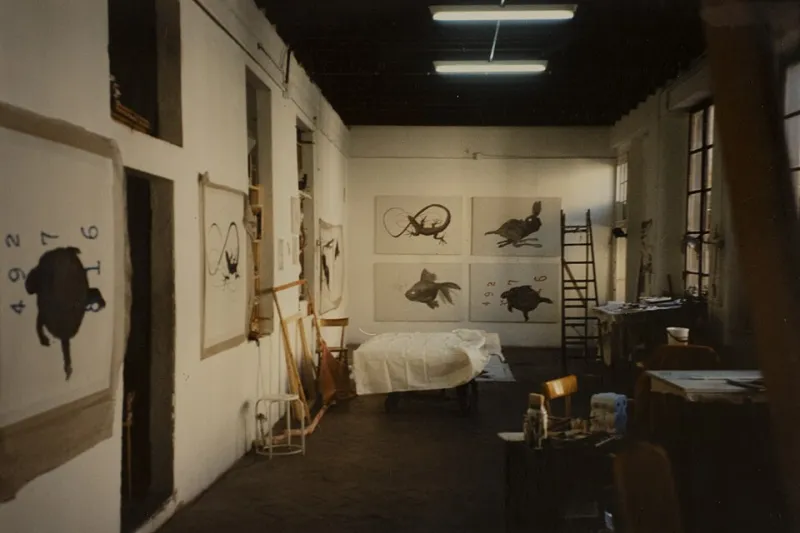
Photo: Andrea Marescalchi, CC BY-SA 4.0, via Wikimedia Commons
There is a particular sound a city makes when it loses its makers. It sounds like a unit being cleared: the clatter of a kiln going into a van, the echo of a room with the drawings taken down. It is not dramatic. Nobody protests. The building simply changes use, and a few dozen people who made things in Brighton start making them in Worthing, or Hastings, or a spare room in Portslade, or not at all.
We keep describing this as a housing story. It is not. It is an infrastructure story, and we are failing to fund the infrastructure.
The squeeze is not a mood
The workspace crunch across Brighton and Hove is easy to dramatise and harder to quantify, which is exactly why it keeps sliding down the agenda. But the pattern is familiar to anyone who has looked for a studio in the last few years. The railway arches that once absorbed a whole tier of emerging practice are now priced, repurposed or wrapped in a lease so short it barely covers a single body of work. Large publicly owned buildings with deep floorplates and goods lifts – the kind of stock that suits ceramics, print, fabrication and rehearsal – come up for redevelopment and go to student housing, co-living or yet more flats. Meanwhile-use arrangements give artists a home for eighteen months and then end, as they were always designed to.
And the smaller end, the shared workspace, the desk in a room above a shop on London Road, the shed behind a pub in Hove? It is the first thing to go when business rates, insurance and energy bills land, and the last thing anyone thinks to replace.
Short leases make small art
Here is what a twelve-month rolling lease actually does to a practice. It stops you buying the kiln. It stops you taking on the commission that needs a two-metre mould. It stops you insuring properly, storing materials, hiring an assistant, or letting a curator see the work in the space where it was made. It makes every decision provisional, and provisional work is what you get.
We talk endlessly about artist development in this city. Development requires a room you can lock.
What a creative land trust actually does
A creative land trust is not a romantic idea about collectives. It is a fairly boring piece of financial engineering, which is why it might work.
The model, proven at scale in London and being adapted in cities across the UK, is this: a charitable body acquires or holds a building – or a long lease over one – and legally restricts its use to affordable creative workspace in perpetuity. Rents are set against local incomes rather than open-market comparables. Surpluses are recycled into the building rather than extracted. Crucially, the asset is taken out of the speculative market, so the value cannot be realised by selling it out from under the tenants.
Creative land trusts take several shapes: outright purchase funded by social investment and philanthropic capital; long leases gifted or sold cheaply by a public landlord; developer contributions packaged into a building as part of a planning consent; or community share offers, where residents buy in because they would rather have a printworks down the road than another block of buy-to-let.
What all of them share is a refusal to accept that affordability is a temporary condition to be negotiated at each lease renewal. Permanence is the whole point.
The money exists; the will is patchier
We are not short of mechanisms. Section 106 agreements and the Community Infrastructure Levy can capture value from development and put it into workspace. Local plans can designate affordable workspace and require it in new schemes. Assets of Community Value listing buys a community time to bid. The Community Right to Buy gives neighbourhood groups a genuine route to purchase. Council-owned property can be disposed of on terms that protect use rather than simply maximising receipt.
What is missing is not the toolkit. It is the sequencing, the staffing and the political nerve to say no to a higher offer.
Too often, affordable workspace in a new development arrives as a clause in a legal agreement with no nominated body to take it on, no rent benchmark attached and no enforcement if it quietly becomes a co-working brand at market rates in year three. A condition without a custodian is a press release.
Three things that would change the picture this year
Name a delivery vehicle. Brighton and Hove needs one organisation – a trust, a charitable subsidiary, a partnership – with a mandate to hold workspace permanently, and the council needs to be willing to transfer or lease assets to it on protected terms.
Attach affordability to the building, not the tenant. Rent covenants on the freehold, enforced at every disposal, with a register of who is accountable. If it can be lifted by a future owner, it is not protection.
Stop measuring success in units delivered. A scheme that creates forty homes and displaces nine studios has not obviously improved the city. Value the workspace in the viability appraisal at the start, not as the last item traded away.
What commissioners should do about it
As an arts funding body we have to be honest about our own part in this. Grants that pay for programmes but never for overheads push artists toward precarity. Project funding that assumes a free or cheap room quietly subsidises the landlord. If we want a thriving visual arts ecology in this city, some of our money has to go into buildings, access improvements, secure tenancies and the dull but decisive business of keeping the lights on.
We should also be convening. The council, developers, universities, housing associations, philanthropists and artists themselves are all in the same conversation, usually in different rooms. A land trust is the sort of thing that gets built when somebody insists everyone sit down together.
A city that keeps its makers
Brighton and Hove trades on the idea of itself as a place where things get made. That reputation is not maintained by marketing. It is maintained by rent, security and a room with a sink in it.
Arches do not grow back. Once the studios go, they go for good – and the artists who leave do not usually come home. If we want a cultural strategy with any substance behind it, the first question is not what we will programme. It is where the people making it will stand.