Rain Stops Play, So Let's Plan for It: Building a Seafront Arts Season That Can Take a Pasting
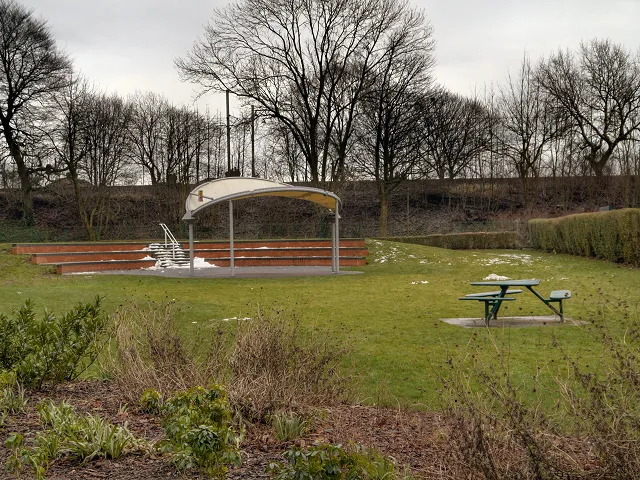
Photo: David Dixon , CC BY-SA 2.0, via Wikimedia Commons
Every summer, Brighton and Hove pulls off a small miracle. Madeira Drive grows scaffolding, Hove Lawns sprout marquees, and a stretch of promenade that spends eleven months of the year functioning as a wind tunnel briefly becomes the best free venue in Britain.
Then the weather arrives. A yellow warning for wind lands on the Thursday. The rigging crew stand in a car park watching a forecast that has changed three times since breakfast. Somebody's insurer wants to know whether the structure is rated for gusts of fifty miles an hour. The show – or part of it – does not happen, and everyone involved quietly absorbs the loss, because the budget never had a line for the sea.
That is not a complaint about British weather. It is a complaint about how we plan for it.
The forecast isn't the problem – the fiction is
Outdoor arts in this city has long been commissioned as though summer were a guaranteed delivery partner. Programmes are built around a handful of weeks in July and August, budgets are set at fair-weather prices, and the wet-weather plan is a single sentence at the bottom of a risk assessment. When the wind gets up – and on this coast it always does – the loss lands on the artist, the producer, or the volunteer who has to tell a hundred people on the prom that the thing they came for is off.
That is not resilience. That is optimism wearing a high-vis vest.
The irony is that Brighton and Hove already knows how to do this. Brighton Festival and the Fringe have spent decades building indoor safety nets, shared venues and flexible scheduling into their DNA. The outdoor programme should inherit that muscle memory rather than reinventing it every May.
Build for the coast, not for the brochure
The seafront is a difficult landlord. Shingle laid over compacted hardcore means you cannot rely on ground anchors, so anything tall needs ballast – and a lot of it. Salt air eats fixings that would happily survive a decade inland, which means marine-grade stainless steel and a realistic replacement budget. Structures that behave beautifully in a park – pop-up gazebos, lightweight stretch tents, anything with a sail-like profile – become entirely different objects when there is nothing between them and the Channel.
The answers exist and they are gloriously unglamorous: weight over height; low-slung staging; choreography written for a hundred metres of open promenade rather than a fixed set; sound design that copes with wind noise and doesn't need a wall of PA; printed material that survives drizzle; signage honest enough to say what happens if it rains.
And cost the contingency in from day one. Two programmed dates instead of one. A covered plan B within walking distance – Shelter Hall, a church hall, a library – booked and paid for rather than hoped for. Artists should never be asked to donate their flexibility as a condition of being funded.
Licences, promenades and the politics of pavement
Permission is the other weather system. Getting a small piece of work onto the promenade can mean conversations with the council's events team, the seafront estate, highways, licensing and occasionally the harbour authority – paperwork wildly disproportionate to the scale of the thing. The result is that artists gravitate to the same few sanctioned sites and away from the odd corners where outdoor work is most alive: the underpass, the strip behind the Peace Statue, the stretch of Madeira Drive nobody quite claims.
A civic-minded commissioner should be smoothing that path rather than adding to it: one front door, plain-English guidance on what does and doesn't need a licence, risk assessment proportional to risk, and a standing presumption in favour of small, quiet, low-impact work. If a five-person show in a gazebo is treated like a stadium gig, only stadium gigs will happen.
Access is not a bolt-on
Wheelchair routes across shingle. Blue Badge parking that isn't half a mile away. Accessible toilets that are genuinely open in the evening. Step-free options at every site, British Sign Language interpretation, relaxed performances, quiet hours. Access planned from the start costs a fraction of retrofitting it later – and it makes the work better for the audience who never fills in a feedback form.
None of this is exotic. It is the difference between a public art programme and a private party that happens to be outdoors.
Commission for four seasons, not one
Here is the argument we would most like funders to hear. Stop treating outdoor work as a summer product.
October half-term, February half-term, winter light trails, dawn performances in March, a wet-weather residency that leans into the grey rather than fleeing it – a February installation on the promenade can be cheaper to insure than a July one, reaches a completely different audience, and keeps technicians, fabricators and stewards in paid work across the year rather than in a three-week sprint. Year-round commissioning is also, bluntly, better value: the same rigging, the same relationships, the same risk assessments, amortised over twelve months instead of six weeks.
There is a rich seam of work here about tide, migration, loss and return that only makes sense at the edge of the water in bad weather. Brighton has the artists. What it lacks is a calendar that trusts them with the difficult months.
What funders could actually change
Three practical shifts would transform the outdoor ecology of this city faster than any amount of extra project cash.
Multi-year outdoor commissions. One season at a time forces producers to start from zero every spring. Three-year commitments let people build, store, maintain and improve.
A protected weather contingency line. Money set aside for cancellations, extra crew days and structure hire should be a legitimate budget heading, not something quietly clawed back as underspend.
Fund the producer, not just the project. The invisible labour of licensing, insurance, stewarding and site management is what makes outdoor work safe and repeatable. Pay for it properly and the art gets braver.
The sea isn't going anywhere
Neither is the rain. The choice in front of us is between a seaside arts season that treats the weather as an unlucky exception and one that treats it as the material it is. We would rather see a smaller programme that reliably happens than a glorious one that gets cancelled on the Thursday.
Brighton's promenade is a stage roughly four miles long, free to enter and open every day of the year. It is time our commissioning caught up with the venue.