The Civic Studio: Why Brighton's Next Big Commission Might Be a Job Inside the Council
There's a version of this story where an artist turns up at Hove Town Hall, paints a mural of a seagull, and everyone goes home feeling cultured. That's not the version worth funding.
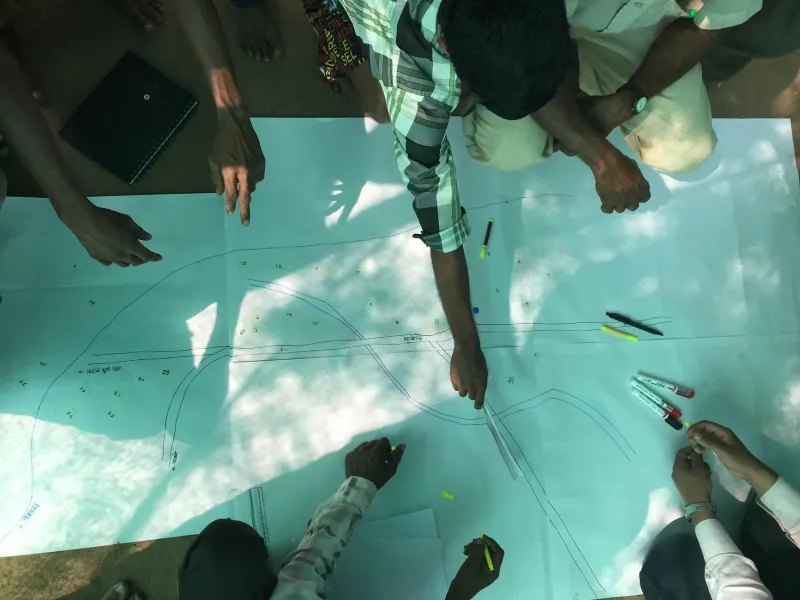
The version worth funding is quieter and stranger. An artist sits in a planning meeting about a seafront site. They're not there to illustrate the officer's report. They're there because they can hear the gap between the language of policy and the lives of the people who'll use the place. They ask the question nobody has budgeted for. They sketch the alternative. They help a housing team understand why a consultation felt like a brick wall to residents in Whitehawk. They stay long enough to see the decision shift.
That's the emerging model of the embedded artist: a creative practitioner working inside local government — in planning, housing, public health, regeneration, community safety — as part of the team, not as a bolt-on workshop. It's happening in pockets across the UK. Brighton & Hove should be doing more than watching.
Not a residency. A job with a salary and a desk.
The difference matters. A residency usually has a start, an end and a private view. An embedded artist has a contract, a line manager, a probation period and a role in the room where decisions get made. They might be employed directly by the council, hosted by a cultural organisation, or shared across a partnership. But the key is proximity: they're close enough to the machinery to influence it before the brief is fixed.
That's the bit that should excite anyone who cares about cultural commissioning in this city. Too much arts funding still arrives after the plan is locked. We fund the engagement programme for a regeneration scheme that's already been designed. We fund the mural on the hoarding around a building nobody wanted. We fund the exhibition about loneliness after the public health strategy has been signed off. An embedded artist can work upstream. They can shape the questions, not just decorate the answers.
What it could look like here
Brighton & Hove is a city of sharp contrasts and long memories. We've got a seafront that's both a global brand and a planning headache. We've got housing pressures that push families out of the centre and into temporary accommodation. We've got neighbourhoods — Hangleton, Moulsecoomb, Whitehawk — that have been consulted to death and still wait for the investment. We've got a council that's had to make brutal budget choices and a cultural sector that's knackered but stubborn.
Embedded artists could work across all of that. In planning, they could help translate complex spatial plans into something residents can actually argue with. In housing, they could work with tenants on the design of communal spaces or the language of service letters. In public health, they could collaborate with communities on the stuff that doesn't fit a leaflet: isolation, trust, the fear of asking for help. In economic development, they could challenge the assumption that creativity is a nice-to-have rather than an economic asset.
This isn't about turning artists into junior policy officers. It's about recognising that artists have a particular skill: they notice things, they reframe problems, they make space for awkward truths. Inside an institution, that skill can be genuinely useful. It can also be deeply uncomfortable — for everyone. Which is why the funding has to come with safeguards.
Pay, power and the procurement problem
If Brighton & Hove is going to put creatives on the civic payroll, it needs to do it properly. That means proper pay: a day rate or salary that reflects the artist's experience, not a token fee topped up with 'exposure'. It means expenses, access support, sick pay, parental leave and the same basic protections as any other worker. It means contracts that are long enough to build trust — two years minimum, not twelve weeks — and clear expectations about what the artist is and isn't there to do.
It also means accountability. An artist inside the institution can easily become an artist captured by the institution. The antidote isn't to pretend that won't happen. It's to build dual accountability into the role: reporting to a council team but also to a community panel or local partners; publishing the brief and the learning; giving residents a way to say whether this is working. The artist should be allowed to say uncomfortable things in public without fear of losing the gig. That's not a nice extra. It's the whole point.
And there's a funding design question. Embedded posts shouldn't be cobbled together from leftover project budgets. They need a real budget line, ideally pooled across departments and cultural partners. Arts Council England project grants can support pilot work, but the ambition should be structural: a cultural commissioning fund that can pay for people, not just programmes. Section 106 and community infrastructure levy money should be part of the conversation where it's legitimate. So should public health and housing budgets, because this work is not only 'arts'.
Why this beats another exhibition
A temporary exhibition can be brilliant. It can change how someone sees the city for an afternoon. But when the show comes down, the relationships often come down with it. An embedded artist leaves something more durable: a trail of changed assumptions, a group of residents who know how to talk to the council, a planning team that asks different questions. That's community connection as infrastructure, not as event.
It's not a magic bullet. It won't fix the housing crisis or replace the youth service that got cut. It won't work if the artist is treated as a human shield for bad policy. But it might do something we keep saying we want: put creativity at the centre of civic life, not at the end of it.
So here's the ask for 2026. Brighton & Hove City Council, the cultural sector and funders should co-design a small pilot — three embedded artist posts, properly paid, properly supported, with a real evaluation and a commitment to publish what goes wrong as well as what goes right. Not a consultation exercise. Not a residency with a fancy title. A job. A desk. A voice in the room before the decision is made.
That's the commission worth fighting for. And it's the kind of funding that might actually outlast the launch night.