The Brief Was Written Before We Got in the Room

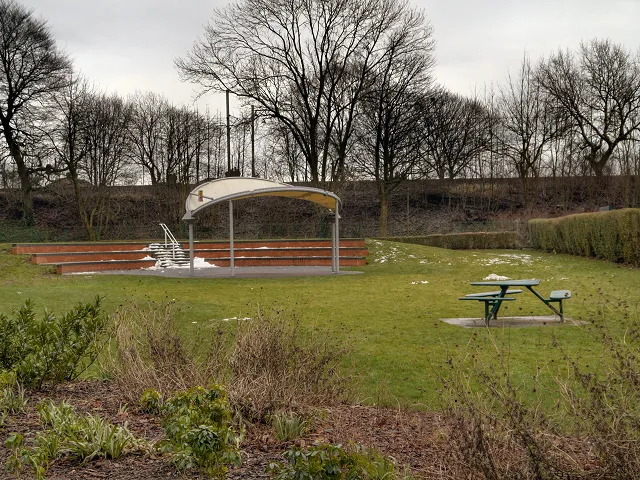
Photo: Bossletpublicart, CC BY 3.0, via Wikimedia Commons
There is a particular kind of email that lands in a Brighton artist's inbox roughly four times a year. Subject line: Invitation to Tender — Public Art Opportunity. Attached, a PDF. Inside, a paragraph of civic poetry about "animating the public realm", a site plan, a budget figure with the VAT status left oddly vague, and a deadline that gives you eleven working days, one of which is a bank holiday.
We hear the same thing from sculptors in Portslade, muralists in North Laine and printmakers sharing a studio off Lewes Road: it is not that Brighton & Hove doesn't commission art. It commissions plenty. The question is who is in a position to say yes by the time the notice goes out — and how much of the city's public art is designed to be with Brighton rather than merely about it.
The notice is not the beginning of the process
By the time a commission is advertised, most of the decisions have already been made. The site has been chosen. The budget has been set, and it has usually been set by a different department from the one that cares about art. The "artist's brief" — that document which sounds like an invitation but functions like a specification — has been drafted with an outcome in mind: a landmark, a wayfinding feature, a bit of colour, a nod to local heritage, something photogenic for a regeneration press release.
Artists are then asked to respond to a question they had no part in shaping. And responding well to someone else's question is a specific, narrow craft — one that tends to reward the studios with a part-time bid writer and a decent design template, not necessarily the practice best suited to the site.
The budget is the brief, whatever the brief says
Read a public art brief carefully and you'll find a contradiction almost every time. A five-figure sum is meant to cover: artist fees, fabrication, installation, transport, structural engineering sign-off, insurance, community engagement, documentation, a launch event, and ongoing maintenance. Sometimes the last item quietly lands on the artist, which is a bit like asking a novelist to pay for the library's shelving.
We've lost count of the number of opportunities where the engagement budget — the part that pays for workshops, conversations, co-design with residents — is the first line to be squeezed and the last to be defended. That is the single clearest signal of what a commission really values. If the money for talking to people in Whitehawk or Hangleton isn't ring-fenced and separately costed, then the "consultation" in the brief will be a hashtag and a clipboard.
Panels, scoring and the mysterious ten per cent
Commissioners will tell you, fairly, that procurement rules exist for good reason. Public money needs an audit trail. Nobody wants contracts handed to mates.
But there is a difference between transparent and legible, and at the moment the process is only the first of those. Scoring criteria are published, yet the weighting is often invisible until after the decision. Panels include a community representative — sometimes one, sometimes unpaid, sometimes briefed an hour before the meeting. Shortlisting tends to favour practices that have already delivered something similar, which is a perfectly reasonable risk-management instinct and also a machine for producing the same handful of studios on rotation.
If you want to know why Brighton's built environment has a recognisable house style of commissioned art, that's why. Not conspiracy. Just a scoring matrix repeating itself.
Decoration is not the enemy, but it isn't the whole job
Let's be fair to the people doing the commissioning. Brighton & Hove has delivered genuinely good work in the past decade — pieces that have made a windswept stretch of Madeira Drive feel like somewhere to linger, projects along Valley Gardens that gave a road scheme a bit of soul. Nobody at the council's culture team is twirling a moustache.
But there's a real distinction between art that decorates the city and art made with it, and it's a distinction the procurement paperwork can't currently detect. A mural delivered in six weeks and a six-month residency that ends in a co-authored piece might score identically under "quality". They are not the same proposition, and residents can tell the difference even when a scoring panel can't.
A local-first conversation, not a local-only rule
Here's the awkward part. "Brighton artists should get Brighton commissions" can sound, to a commissioner, like a request to shut the door on everyone else. It isn't. Nobody sensible wants a city where you can't work outside your own postcode; the traffic of ideas in and out of this place is part of what makes it good.
What we're asking for is simpler: that the default is local, and that going further afield is a decision somebody has to justify. That's how commissioning works in plenty of cultural sectors already — you don't hire a London facilitator for a project in Moulsecoomb without explaining what they bring that a local practitioner can't.
Concretely, that might look like:
- Paid expression-of-interest stages, so responding to a brief doesn't cost artists money they don't have.
- Budgets published in full, including the engagement line and the maintenance line, before the deadline rather than after a query.
- Two Brighton-based practitioners on every panel, paid, with real voting weight.
- A rolling list of local practices by discipline and area, maintained with the same energy as the regeneration documents.
- Debriefs offered to every unsuccessful applicant, not just the ones who chase.
None of that requires new legislation. Most of it requires a paragraph in the next round of funding agreements and a culture lead willing to be mildly unpopular in a meeting.
What the city gets for getting this right
Public art budgets are tiny relative to the schemes they sit inside. That's precisely why they matter: they're one of the few places where a resident can point at something and say, that was made here, by people who live here, and I know someone who helped. That's not a soft outcome. It's the difference between a city that has art in it and a city that makes it.
If you commission in Brighton & Hove, we'd genuinely like to hear from you — not to have a row, but to help you write a better brief. And if you're an artist who's been knocked back in the last twelve months, tell us what the notice said. Patterns are made of anecdotes, and we're collecting.