The Wall Outlives the Launch: Brighton's Public Art Needs a Handover Deal
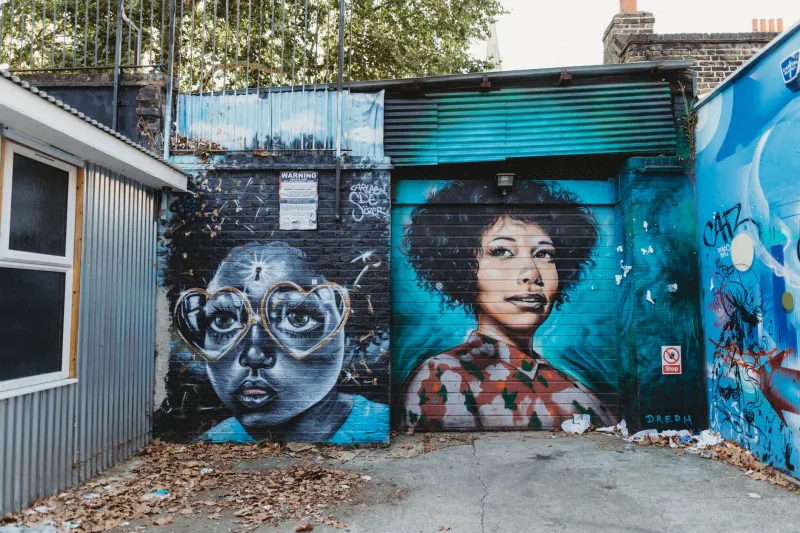
Walk through the North Laine, Kemptown or along the seafront and you can see the payoff of Brighton's public art boom: gable ends turned into gardens, hoardings turned into portraits, underpasses that no longer feel like a dare. We are good at this bit. The launch, the ribbon, the photographer from the local paper, the councillor saying the word 'vibrant'. All excellent.
The problem starts the following Monday.
The launch is the easy part
Public art in Brighton & Hove is often funded through a mix of council grants, developer contributions, Arts Council cash and the sheer stubbornness of artists. The capital side is hard enough. But the afterlife is where things get properly messy. Buildings get sold. Facades get reclad. A leak appears above a mural and nobody knows whose job it is to fix it. A new owner decides the wall would look better in anthracite grey. The funding that paid for the paint runs out, and the artwork quietly becomes someone else's problem — or nobody's.
That is not a niche worry. It is the standard trajectory for a lot of public art. We celebrate a work as if it is permanent, then manage it as if it is temporary. The artist's name fades from the plaque before the paint fades from the wall. And when the wall is sold, the paperwork often says nothing about the thing that made the wall interesting in the first place.
A mural is not a poster
There is a difference between decoration and public art, and it is not just scale. Public art carries a relationship: between the artist, the site, the community and the commissioner. That relationship should not end when the launch photos are filed.
At the moment, too many agreements stop at installation. They cover the fee, the design approval, maybe a bit of anti-graffiti coating, and then nothing. Maintenance is vague. Credit is optional. Removal rights are whatever the building owner thinks they are. Artists can spend months on a work that can be painted over in an afternoon with no notice and no recourse. Moral rights exist in UK law, but they are not much help if nobody knows where the wall is or who owns it.
A future tenure agreement would not solve every problem. It would at least name the problems before they become surprises.
What a future tenure agreement should include
We are not arguing for a 40-page legal document for every painted bench. We are arguing for a baseline. A standard future tenure agreement could be a short annex to any public art commission, grant or planning condition. It should cover five things.
First, a named steward. Not 'the council' in the abstract. A specific team, organisation or building owner responsible for condition checks and day-to-day care.
Second, a maintenance pot. Even a small percentage of the capital budget — say 5% — set aside for cleaning, repair and the occasional re-coat. For a mural expected to last a decade, that is not extravagant. It is realistic.
Third, credit. The artist's name should travel with the work. If the building changes hands, the credit stays. If the work is photographed for a commercial campaign, the artist gets a conversation, not a surprise.
Fourth, removal rights. If the wall has to go, the artist should get notice and a say. That might mean documentation, salvage, a replacement commission or a public explanation. It should not mean a late-night painting-over.
Fifth, a public record. A register entry with photographs, condition notes, artist contact and the agreement itself. Brighton & Hove already has the bones of a cultural infrastructure map. Public art should be on it.
Who pays for the boring bits?
This is where good intentions usually stall. Maintenance is not sexy. No one wants to launch a sinking fund. But the alternative is that we keep commissioning work with a built-in expiry date and then acting surprised when it expires.
There are options. Developer contributions can include a maintenance endowment for artworks in new developments. Council capital budgets can carry a small revenue tail. Grant programmes can ask applicants to name a steward and show a maintenance plan — not as a bureaucratic hurdle, but as a sign that the work is meant to last. Building owners can sign up to a simple handover agreement as part of planning permission.
None of this is radical. It is just the boring infrastructure that makes the exciting stuff stick around. If a mural is worth £30,000 of public money, it is worth £1,500 of future care.
The council can make this the default
Brighton & Hove City Council does not need to reinvent its entire public art policy. It needs to add an afterlife clause. Any artwork on council land, or receiving council funding, should come with a future tenure agreement. Any major planning application with a public art contribution should be expected to include one. The default should be care, not amnesia.
That also means the council should publish a public art register and update it. Not a PDF from three years ago. A living record with condition surveys, contacts and clear stewardship. Artists and residents should be able to look up who is responsible for the wall at the end of their street. That is basic civic infrastructure.
Start with a register, not a ribbon
The next time Brighton & Hove unveils a mural, we would love to see the usual things: the artist looking slightly embarrassed, the free drinks, the local MP pretending to understand street art. But we would also like to see a small paragraph in the press release that says who will look after the work, how it will be maintained, and what happens if the building is sold.
That is not a less joyful launch. It is a more honest one. It says: this work is part of the city now. We are not just borrowing it for the summer.
Public art is a public commitment. In 2026, let's start writing the long part of the agreement, not just the launch invite. The wall will outlive the ribbon. The paperwork should outlive the wall.